Physically accurate prediction for true-to-life visual accuracy.
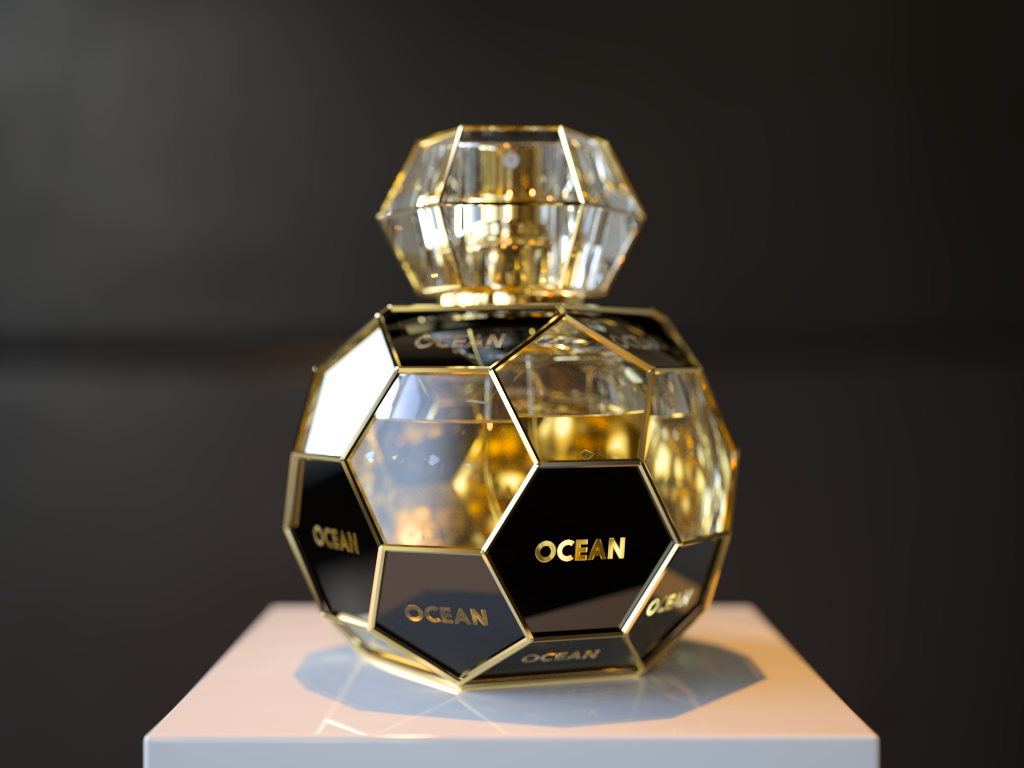
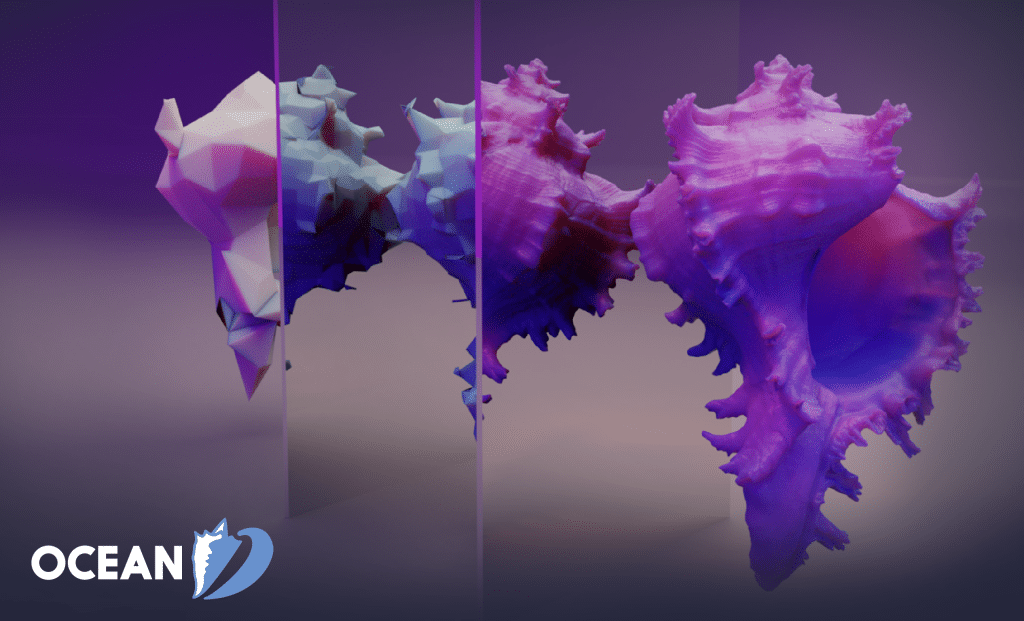
Ocean™ enables predictive image generation grounded in the laws of physics, optics, and human vision. Whether you’re designing advanced materials, evaluating surface or volumes under varying light conditions, or analyzing the appearance and performances of complex assemblies, Ocean™ brings unmatched realism with rigorously validated outputs.
Appearance is not a static property—it results from a dynamic interplay of material, light, geometry, and observation conditions. Traditional methods often rely on approximations that fall short when predicting how materials will actually look in real-world environments.
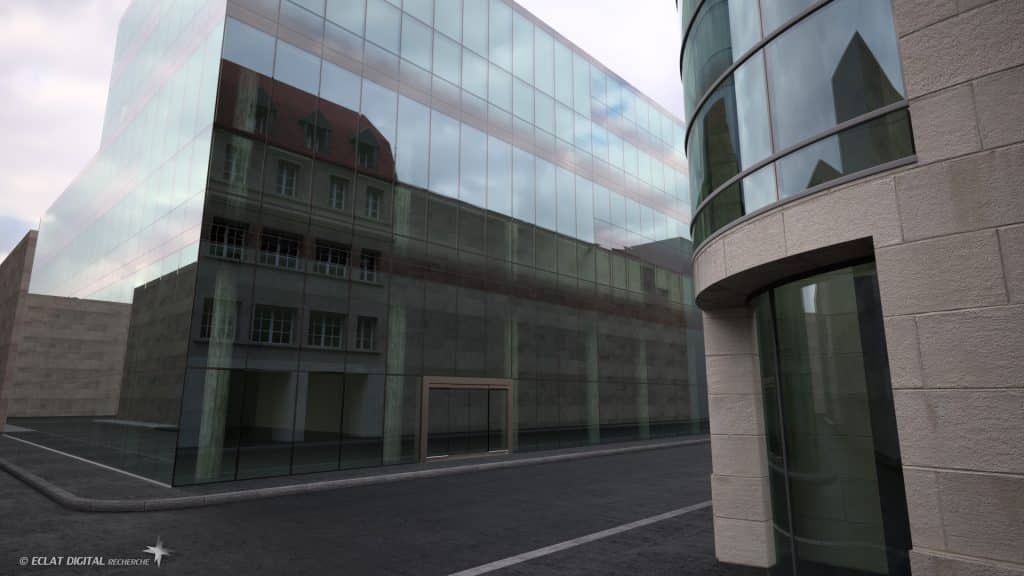
Ocean™ is a full-spectrum ray-tracing software based on radiative transfer theory, spectral rendering, and high-fidelity data integration. It is designed for professionals who cannot afford visual or physical inaccuracies, such as those in the glass, coatings, automotive, and architectural industries.
Ocean™ provides a predictive view of material appearance and performances under any light source and geometry by simulating :
Ocean™ doesn’t just show an image—it shows a prediction, a scientifically valid outcome of light–matter interaction. It enables reliable digital materials visualization and analysis. That’s why major R&D labs and design teams trust Ocean™ for both creative design and engineering validation.
Ocean™ supports a variety of appearance and performances validations through data-rich modeling :
Its powerful engine interprets the physical behavior of light using first-principles models, avoiding guesswork or heuristic approximations common in generic PBR methods.
Ocean™ safeguards and exploits physical values throughout your workflow :
Real material models from measurement devices (e.g., BYK, X-Rite).
Open formats like glTF, OpenEXR, and PDF for traceability.
Support for importing CAD meshes, layering systems, and complex optical design .
Seamless integration with simulation chains using Python or customed workflows.
This enables robust design-study reproducibility and ensures the recognition and reuse of high-value datasets across teams and departments.
Ocean™ bridges design and engineering—allowing:
Ocean™ has been used in numerous studies, proceedings, and design volumes for:
Browse our articles, DOIs, and peer-reviewed publications to explore the science behind each case.
Ocean™ can predict how a product will look—down to nano-component to macro-systems, under any set of environmental or design conditions. It uses open data as input and output, to integrate seamlessy into data-driven workflows.
Use Ocean™ to:
Ocean™’s predictive simulation engine ensures that visual appearance and optical performance are evaluated with the same underlying physics. This makes it a trusted solution for:
R&D teams requiring confidence in pre-production visuals.
Color and appearance engineers needing precise ΔE and Lab* values.
Architects, designers, and product developers seeking a WYSIWYG “What You See Is What You Get” tool that respects material truth.
Ocean™ combines predictive visual output with measurable optical data, eliminating the division between creative intuition and engineering validation.
Spectral radiance maps
Colorimetric data (XYZ, LAB, chromaticity diagrams).
Glare, luminance, illuminance distributions.
Color difference (ΔE) under multiple illuminants.
Photometric and radiometric quantities
Predicting appearance is no longer speculative. With Ocean™, you don’t just generate an image—you simulate a realistic, physics-based view of your product in its final use conditions.
Backed by science, optics, and a library of validated methods, Ocean™ is the trusted tool for anyone who demands accuracy, efficiency, and data integrity across the appearance prediction pipeline.
Ocean™ delivers physically reliable simulation results by combining state-of-the-art computational optics with rigorous data handling. This enables not only predictive images, but also quantitative data suitable for engineering decision-making and scientific analysis.
Ocean™ sets itself apart through features designed for high-fidelity rendering and optical analysis :
All light transport is simulated across the visible spectrum with spectral resolution, ensuring accurate color perception, energy modeling, and metameric analysis.
Our physically-based light solver handles complex optical effects—caustics, interreflections, sub-surface scattering—with high convergence accuracy.
Real-world lighting environments are captured in full complexity, including indirect lighting, occlusion, and daylighting scenarios with precise solar spectrum inputs.
Simulations integrate spectral sky models, calibrated HDR environment maps, or user-defined sources to reflect actual lighting conditions and geometries.
Ocean™ adheres to CIE standards for colorimetry and appearance modeling, ensuring that results are aligned with internationally accepted scientific definitions and visual comfort metrics.
Discover how Ocean™ can revolutionize your optical simulations. Fill out the contact form below to schedule a demo and see our software in action!
Contact us today for a personalized consultation !
Ocean™ is not a visual approximation tool—it is a physics-based optical simulator.
While traditional PBR (Physically Based Rendering) engines rely on visual hacks and estimated parameters (e.g., specular/gloss sliders), Ocean™ computes appearance using real-world spectral data, full light–material interaction modeling, and compliance with optical science principles. It generates predictive images and data that correlate with actual measured performance.
Ocean™ uses a spectral bidirectional path tracing engine and applies radiative transfer equations across the visible light spectrum. It directly incorporates measured optical properties—including BSDF, BTDF, transmittance, and reflectance—ensuring that every pixel is physically meaningful. Results are aligned with CIE standards for color and appearance evaluation.
Yes. Ocean™ is ideal for the early design phase when exploring material options, visual traits, or functional requirements. Creative teams can visualize accurate appearance outcomes while ensuring those visuals are grounded in physical reality, which accelerates decision-making and avoids costly redesigns later.
Ocean™ provides both. Every simulation outputs a high-fidelity image and a comprehensive set of optical data:
Ocean™ supports full global illumination and real-world lighting environments. You can simulate:
This enables accurate rendering under search, viewing, and usage conditions—outdoors, indoors, or mixed lighting scenarios.
Yes. Ocean™ supports interoperability with:
You can plug Ocean™ into your current workflow without reinventing your design or engineering pipeline.
Absolutely. Ocean™ supports dynamic simulations, allowing you to study:
This is ideal for appearance prediction of automotive exteriors, architectural façades, and consumer products under changing conditions.
Ocean™ is trusted by :